Water restoration
services explained.
Learn how extraction removes standing water, how equipment dries affected spaces, and how cleanup addresses affected surfaces.
01 / Remove standing water
Water extraction
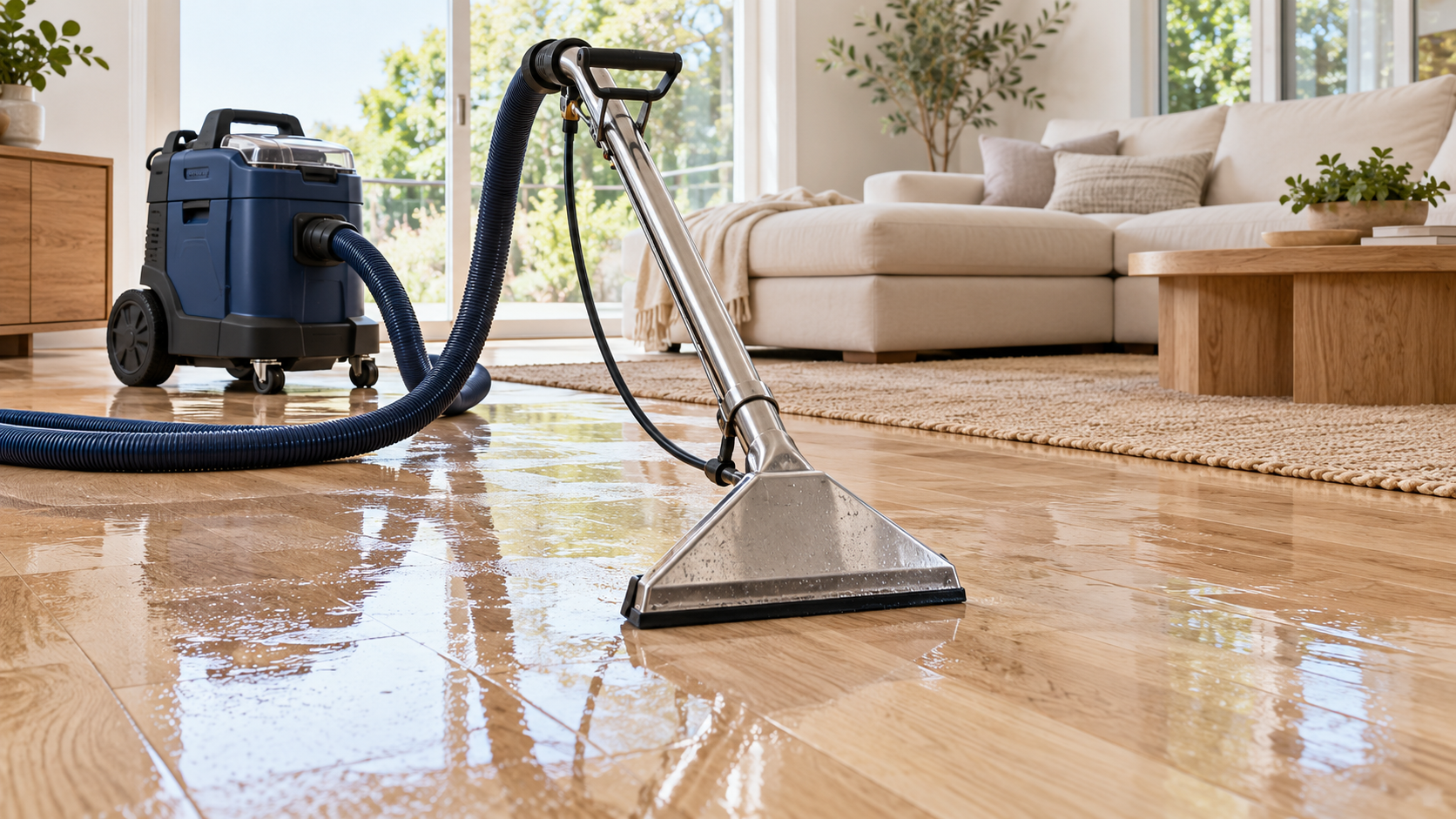
Water extraction removes standing water after a pipe or appliance leak. The equipment shown collects water from an affected floor.
The source of the leak and the affected rooms help define the work needed. Start with where the water is and how far it has spread.
- Where is water present?
- What work might follow extraction?
02 / Dry the affected space
Structural drying
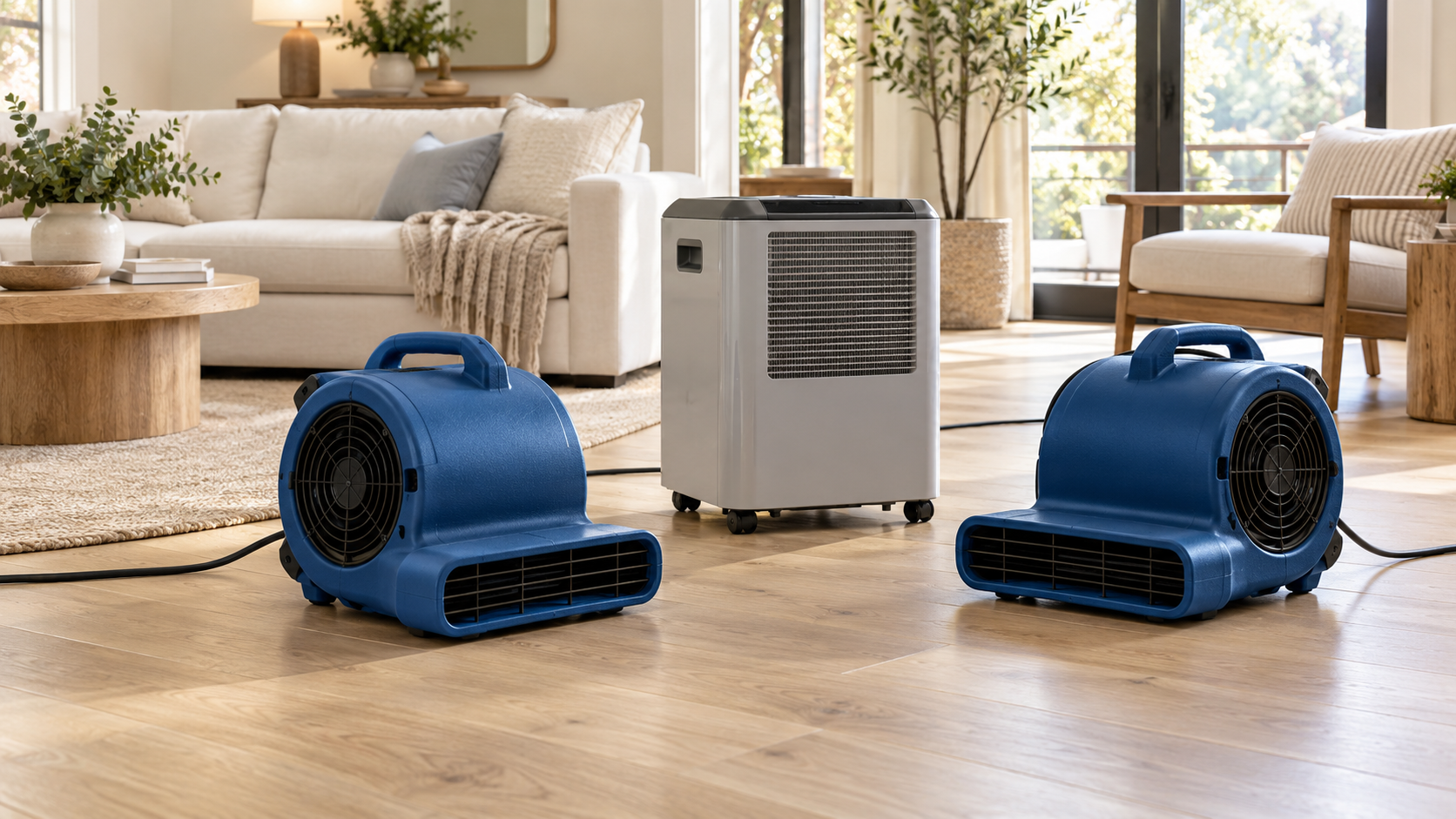
Structural drying uses air movers and dehumidifiers to dry affected spaces after standing water has been removed.
Equipment and placement depend on the room, affected surfaces and the work involved.
- Which areas were affected by the leak?
- What equipment and work might be needed?
03 / Clean affected surfaces
Cleanup after leaks
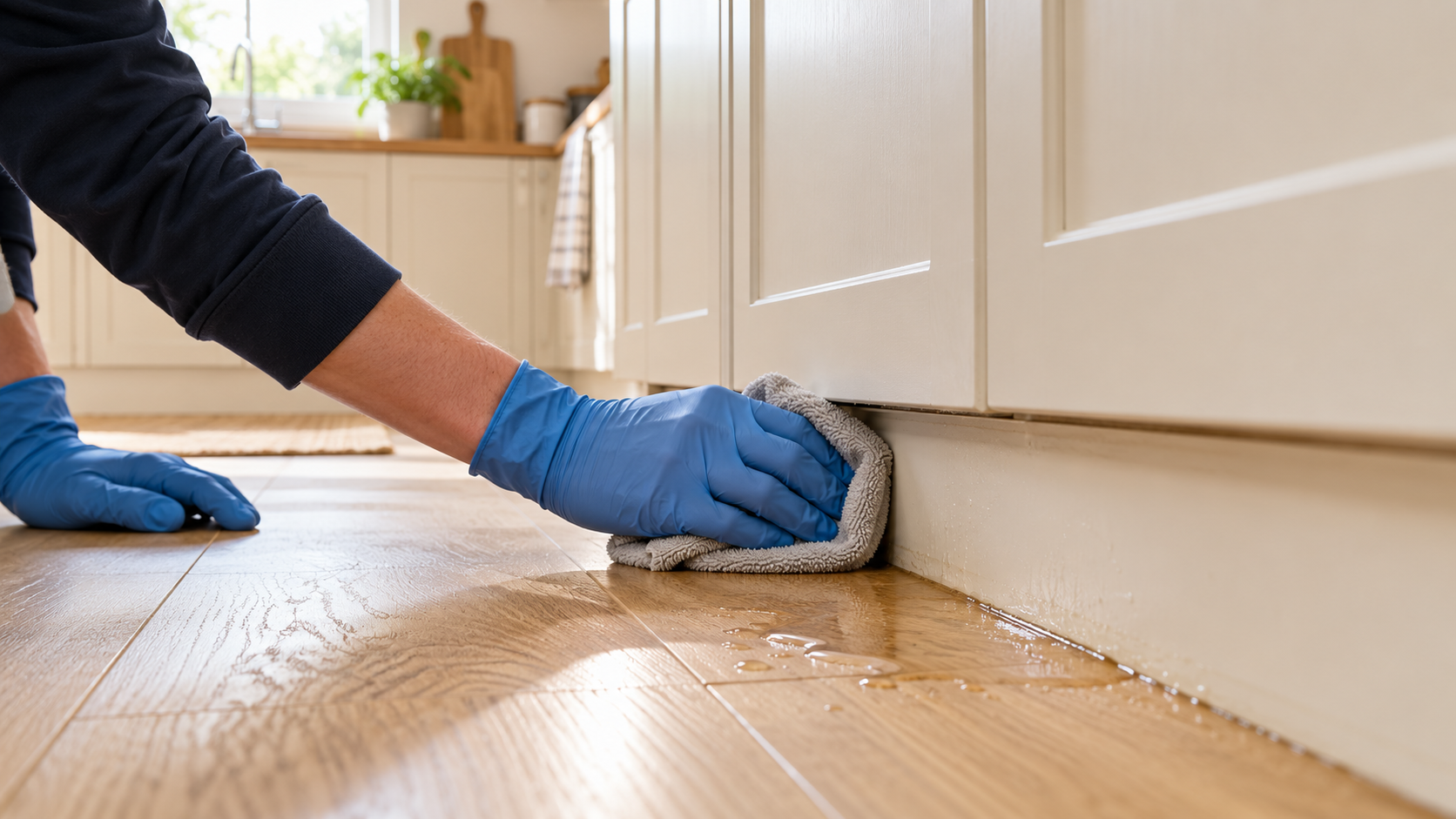
Cleanup after a leak includes cleaning affected surfaces. The illustration shows cleaning along the base of kitchen cabinetry.
The affected surfaces guide the scope of cleanup. Water removal and drying may be separate parts of the work.
- Which surfaces need cleaning?
- Is any further work needed?
Tell us what happened.
Describe the leak and the rooms or surfaces that need attention. Choose the service that best fits what you can see.