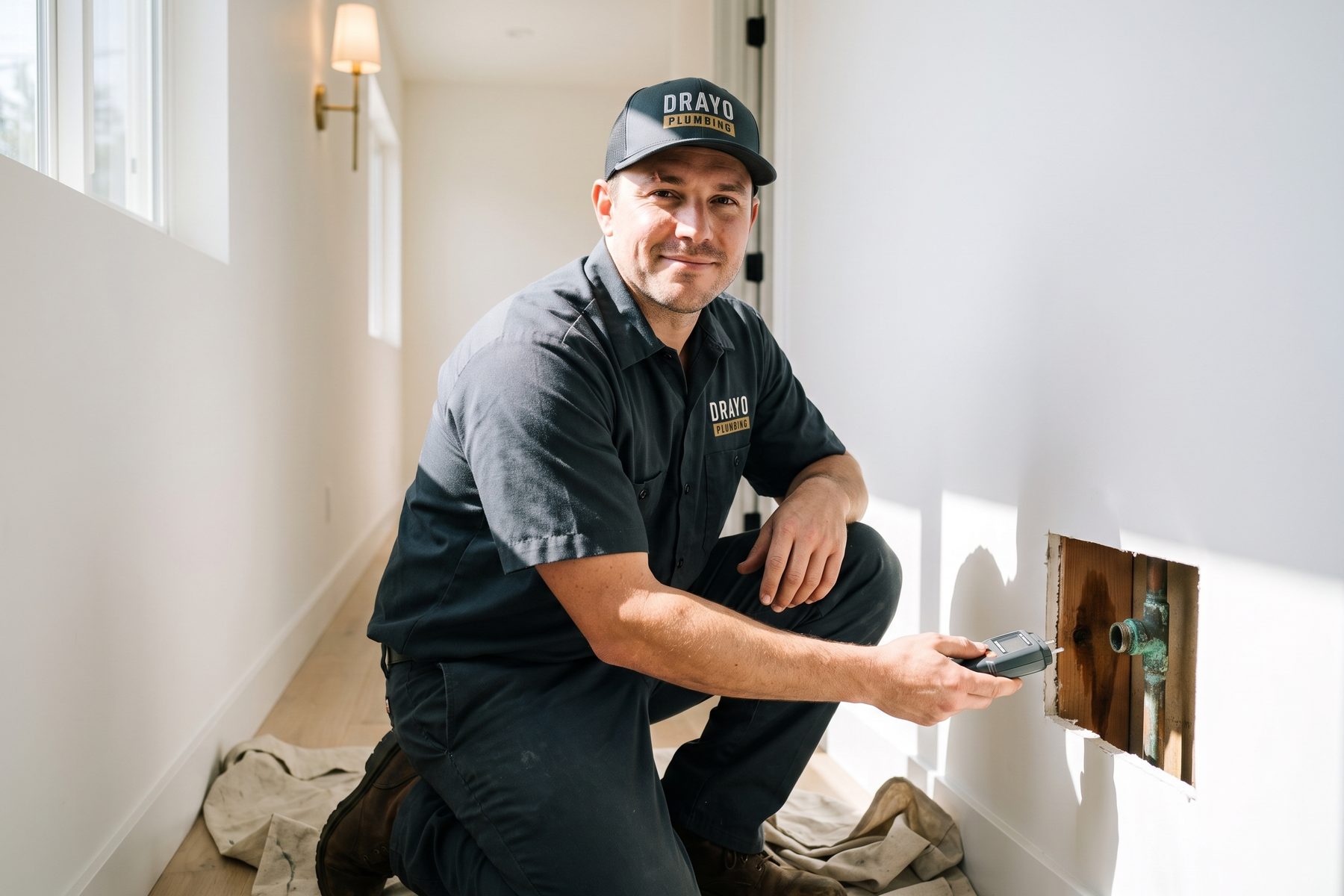
Find the leak first. Open as little as possible.
A leak you can see is easy. The expensive ones are behind walls, under the slab or out in the yard. We locate the source before we cut anything, so the repair — and the patching afterward — stays small.
When it’s time to call
- Your water bill jumped and nothing changed at home
- You hear water running when every fixture is off
- A warm spot on the floor — a possible hot-water leak under the slab
- Stains, bubbling paint, soft drywall or a musty smell
- The leak indicator on your water meter moves with everything off
- Damp soil or a green patch in the yard that never dries
How we handle it
Confirm there’s a leak
With every fixture off, we check the meter to confirm water is going somewhere.
Narrow it down
We isolate hot from cold and section by section, then use listening and moisture tools to pinpoint the spot.
Show you and price it
You see where it is and get written prices for the options — a spot repair, rerouting the line, or replacing a section.
Repair and pressure-test
We fix it, test the line under pressure, and tell you exactly what patching the opening will need.
Check for a hidden leak yourself
- Turn off every faucet, appliance and irrigation line in the house.
- Find your water meter — usually in a concrete box near the curb — and look for the small leak indicator (often a triangle or tiny dial).
- If it’s turning, water is escaping somewhere. Photograph the meter reading, wait 30 minutes without using water, and compare.
- If water is actively spreading, turn off your main shutoff and call.
Common questions
Will you have to tear up my floor?
Usually not much of it. Locating the leak first means a small, targeted opening. For slab leaks, rerouting the line through a wall or ceiling can sometimes avoid breaking the slab at all — we’ll explain and price each option.
Does homeowner’s insurance cover leaks?
Policies vary a lot. We can photograph what we find and write up the cause, which helps when you talk to your insurer.
Is a small drip worth a visit?
A slow leak inside a wall can rot framing and grow mold long before it shows. If you can hear it or see staining, it’s worth finding.
Let’s take a look.
Call for anything urgent, or book a visit and we’ll confirm a time window.